Strive for innovation -- Solbourg
About Solbourg
Solbourg is an innovative technology enterprise focused on the research, development, and manufacturing of advanced equipment for the tobacco, logistics, tea, pharmaceutical, and environmental protection industries. With over 20 years of experience, we have earned recognition and trust from clients around the world.
Read more
Committed to the International Market
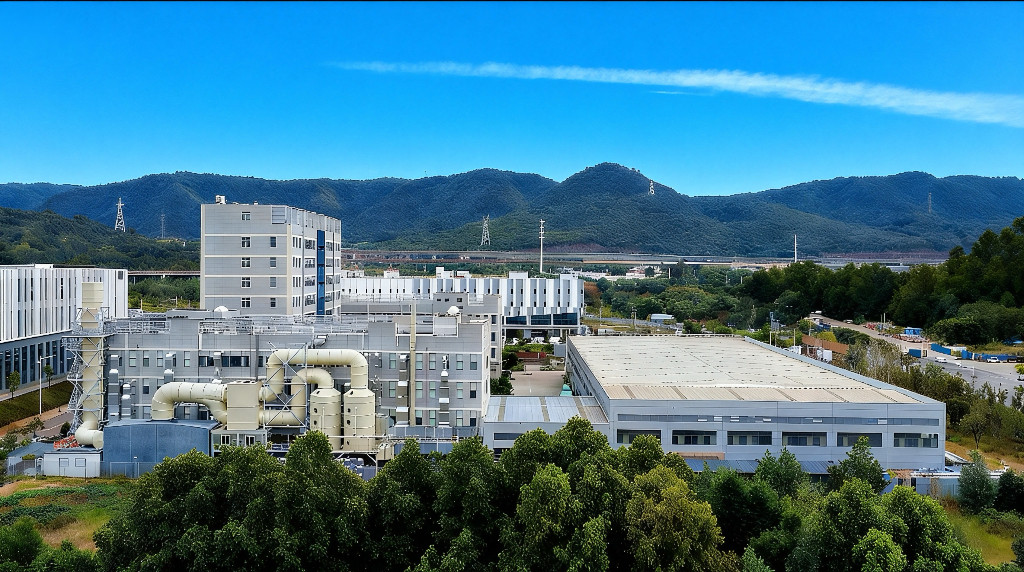 Aerial View of Solbourg, Kunming
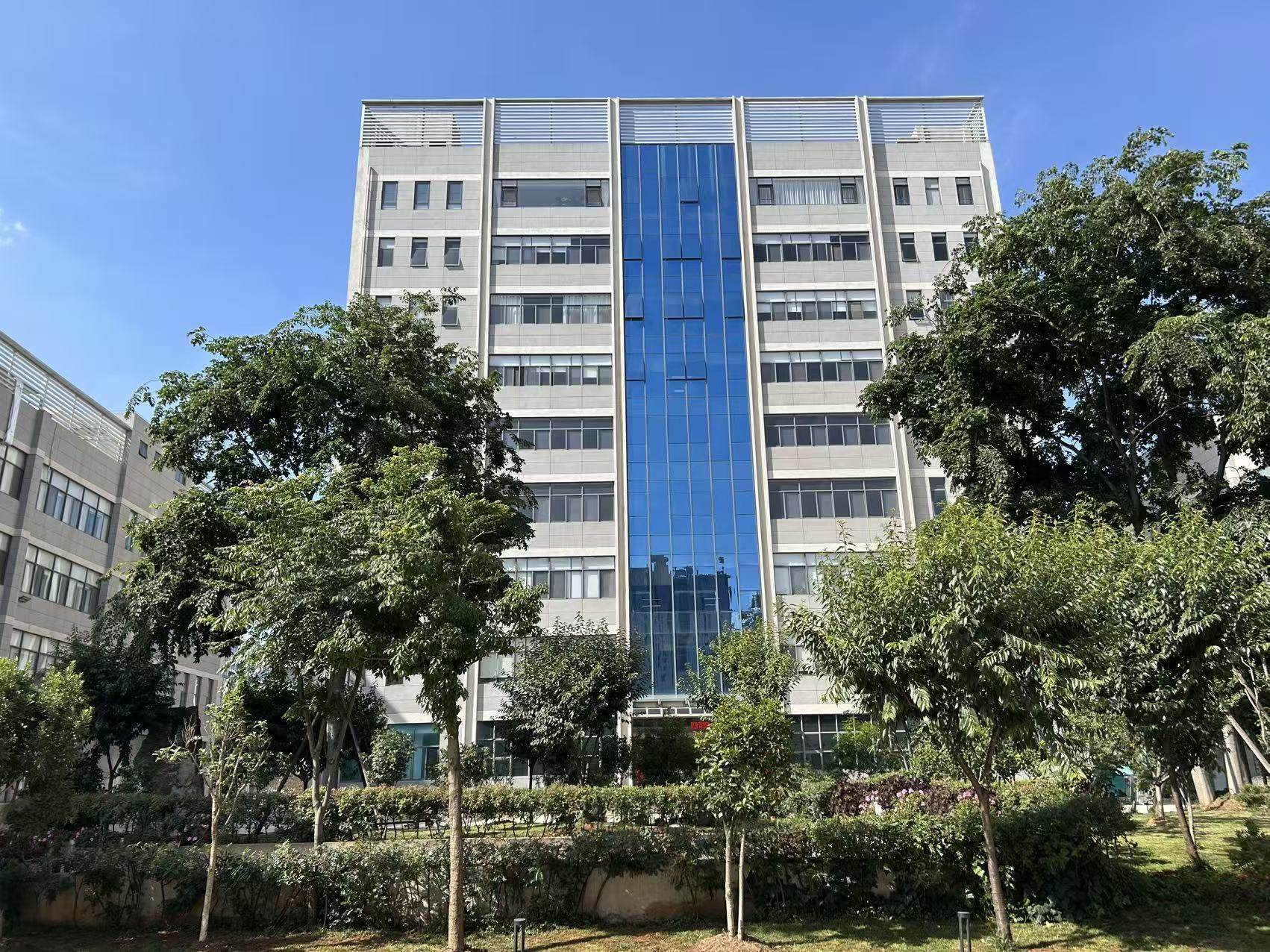 R&D Center, Kunming
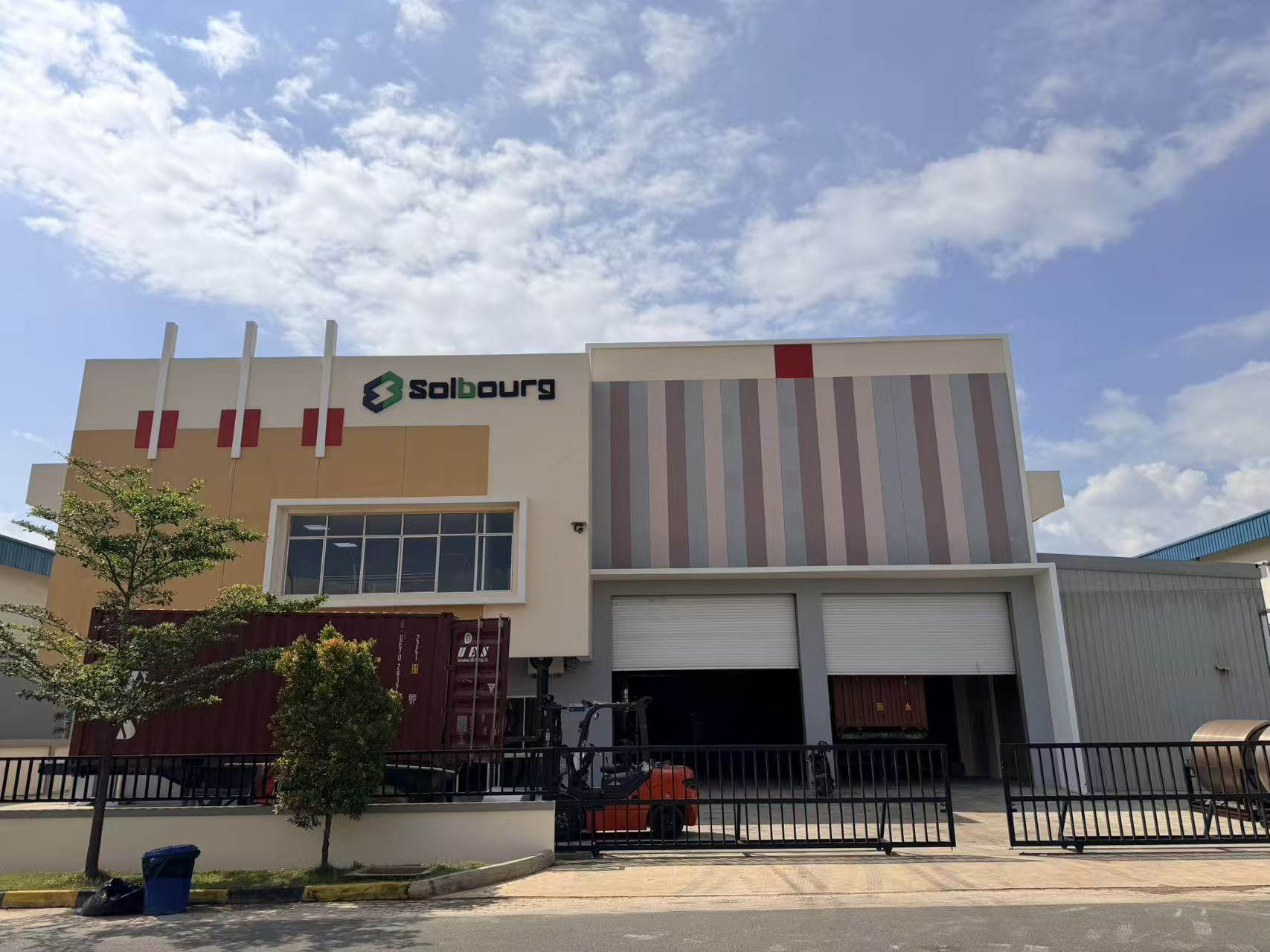 Solbourg, Indonesia
Solbourg is dedicated to serving the global machinery market. Our equipment is exported to countries such as South Korea, Indonesia, the United Arab Emirates, Iran, Turkey, and beyond...
addShow more
Solbourg is dedicated to serving the global machinery market. Our equipment is exported to countries such as South Korea, Indonesia, the United Arab Emirates, Iran, Turkey, Russia and beyond.
We have a technical R&D center in Kunming, China, as well as assembly facilities in Shenzhen, China, and Batam, Indonesia.
We are also in the process of setting up a service center in Dubai, UAE, to further enhance support for our international customers.
removeShow less
Main Products
View more
Solbourg offers a full range of slurry process production solutions, covering from lab makers, small trial lines, small production lines to medium- and large-scale production lines. High Flexibility: Different sheets can be produced only by adjusting raw materials and processes, which maximizes equipment utilization and ROI (Return on Investment), enabling clients to swiftly adapt to market shifts and capture emerging opportunities. Advanced Grinding and Dosing Technology: Adopts three-stage low temperature grinding process, maximumly ensuring even particle size and maintain tobacco flavor. Equipped with multi-homogenizing design, ensuring the homogeneity of finished slurry and stability of finished sheets. Optional Drying Solutions : Electricity drying for width <800mm and steam drying for width >800mm. Diverse Final Product Forms Output: Rolls/Small pieces in square, rectangle or rhombus/Shreds.

Compared with Slurry Process and Paper-making Process, Extrusion and Rolling Method features lower equipment investment and production costs. Solbourg offers three choices: Standard Version for Tradition, High-performance Version for Tradition, and Specified Version for HNB. Standard Version for Tradition: Larger diameter of rollers than that of LB14 to make the rolled sheets more homogeneous; equipped with two moisture meters to ensure stable quality of sheets while no moisture meter is included in LB14. High-Performance Version for Tradition: Adopts Four-Roller & Three-Compression design. In the last compression stage, each roller is equipped with an independent servo drive and an automatic adjustment system for controlling roller gap. Utilizes negative pressure conveying for powder materials with smart high-precision gas-solid separation and loss-in-weight dosing technology. These upgrades contribute to more homogeneous sheets and more automated production. Specified Version for HNB: adopts multiple advanced technologies based on the high performance one, including wet grinding with wet fiber addition, dry grinding with dry fiber addition, multi-layered low-temperature drying, grammage/moisture/temperature scanning, automatic edge trimming, automatic winding, and sheet roll slitting, etc.

A more traditional and large scale approach would be paper making method. Such recon production method usually starts at capacity of 2000kg/hr, making it the largest in scale. However, with over 98% of water content in its slurrys, this method is very energy consuming

Serving as an essential part of cigarette production, primary production line would employs automated procedures to process lamina and stem into qualified shreds. The line is divided into four sections: lamina process cut lamina process cut stem process mixing and blending process

The Tobacco Threshing and Redrying Process separates lamina from stems through threshing, followed by redrying that reduces lamina moisture to 11%–13%, thereby supplying high-quality raw materials for subsequent production stages. The production line consists of the following components: Preprocessing: Vacuum conditioning, bundle opening, tip cutting, conditioning, and impurity removal. Separation: Tobacco leaves are divided into lamina, scraps, and stems. Redrying: Lamina, scraps, and stems undergo redrying treatment. Baler: Lamina is compressed into standardized boxes with specified dimensions and density. Auxiliary Equipment: Includes dedicated dust removal and electronic control systems.
News
View more
Solbourg visited two of Russia’s largest tobacco manufacturers, touring HNB and conventional processing lines, and exchanging insights on equipment and processes, laying groundwork for future cooperation.

In the production of Reconstituted Tobacco Sheet and Homogenized Tobacco, the material leaving the forming and drying stages is commonly produced as a continuous sheet or wound web. This continuous sheet cannot always enter the next process directly. Depending on the finished product and downstream manufacturing route, it may require edge trimming, longitudinal slitting, rewinding into smaller rolls, or further cutting. The Tobacco Sheet Slitting Machine is therefore an important link between sheet formation and downstream processing. Although its apparent task is simply to cut the sheet, industrial performance depends on far more than the blade itself. Slitting accuracy, web-tension stability, sheet integrity, and rewinding quality all directly affect downstream efficiency and product consistency.

Nicotine is one of the most characteristic naturally occurring alkaloids in tobacco and an important raw material in tobacco processing, tobacco by-product utilization, and parts of the next-generation tobacco-product value chain. Tobacco leaves, stems, dust, fragments, and certain processing by-products may all contain recoverable nicotine. Through suitable extraction, separation, and purification processes, nicotine can be recovered and subsequently prepared at different concentrations or purity levels according to its intended downstream use. Industrial nicotine extraction is therefore far more than simply “washing nicotine out of tobacco.” It is a systems-engineering process involving raw-material pretreatment, extraction, solid–liquid separation, concentration, purification, and refining.

For decades, tobacco machinery was evaluated in relatively straightforward terms. A cutter was judged by throughput, cut width, and knife life; a GLT line by threshing performance and capacity; a drying system by outlet moisture; and a reconstituted-tobacco line by web width, line speed, and tonnes per hour. In recent years, however, a clear shift has emerged in advanced international tobacco-processing technology: customers are increasingly purchasing process capability rather than machine capability. The machine is becoming the platform through which that process capability is delivered.

When people hear the term Reconstituted Tobacco, many still think first of converting tobacco dust, stems, and other production by-products back into a sheet-like tobacco material. That interpretation is not entirely wrong, but in today’s tobacco industry it is no longer sufficient. Against the rapid development of Heated Tobacco Products (HTPs), the role of reconstituted tobacco is changing fundamentally. It is evolving from a conventional raw-material recovery method into a functional tobacco material whose properties can be deliberately designed and controlled.

In the tobacco machinery industry, one of the most common questions is straightforward: “What is the capacity of this Green Leaf Threshing (GLT) line?” 5 t/h, 8 t/h, 10 t/h, or even higher. Capacity certainly matters. From the perspective of leaf processing, however, throughput in tonnes per hour is only one of many GLT performance indicators—and it is by no means the sole criterion for judging the quality of a production line. The core task of a truly high-performance is not simply to “remove stems from leaves.” It is a process designed to convert cured leaf into a stable industrial raw material suitable for long-term storage, transportation, and downstream cigarette manufacturing, while preserving as much of the original raw-material value as possible. In other words, the essence of GLT is the industrial standardization of a naturally variable agricultural material.